12 Reasons Your Switzerland Wedding Proposal Will Fail
Read this blog before you plan a thing …
Planning a proposal in Wengen, Lauterbrunnen or the wider Jungfrau Region? You are in the right place. But read this before you plan a thing. Most couples who arrive here planned it from the wrong sources and the gap between what they expected and what was actually possible has grown wider every year.
I am a proposal photographer and filmmaker based in Wengen, in the heart of the Jungfrau Region. A year ago I wrote about why local knowledge matters so much for proposals and elopements in Switzerland. The situation since then has not improved. AI planning tools, Instagram and photographers travelling from outside the region have all made it worse.
This piece is written with proposals in mind, but almost every point below applies equally to elopements. The locations are the same. The weather is the same. The restrictions are the same. The difference between a day that feels genuinely yours and one that doesn’t comes down to the same things, whatever you are planning.
These are the twelve reasons I see Switzerland proposals go wrong. And three real stories that show exactly what that looks like.
1. The Photographer Doesn’t Know the Jungfrau Region
Not the obvious ones. Anyone can find those on Instagram. The locations that make a proposal feel genuinely private, genuinely yours, require years of being here. Knowing which path leads where. Which viewpoint has no one on it at 8am. Which farmer will say yes. Which locations are now off limits due to restrictions that are not publicly listed anywhere.
If your photographer or videographer found your location the same way you did, you are both guessing.
2. your photographer travelled here to shoot the proposal
This applies even to photographers based elsewhere in Switzerland. They do not know when the fences go up. They do not know when the cows are in the fields, when late snow closes a path, when early flowers change a location entirely, or when a farmer is harvesting on the exact morning you planned to be there.
And because they have travelled to be here, they have no flexibility. They need to shoot on the day they arrived for, whatever the conditions. Then they leave.
There is also the question of cost. A photographer from outside the region may appear less expensive at first. But most charge for mileage and travel time on top of their rate. I do not. I work here and live here and I know this place inside out.
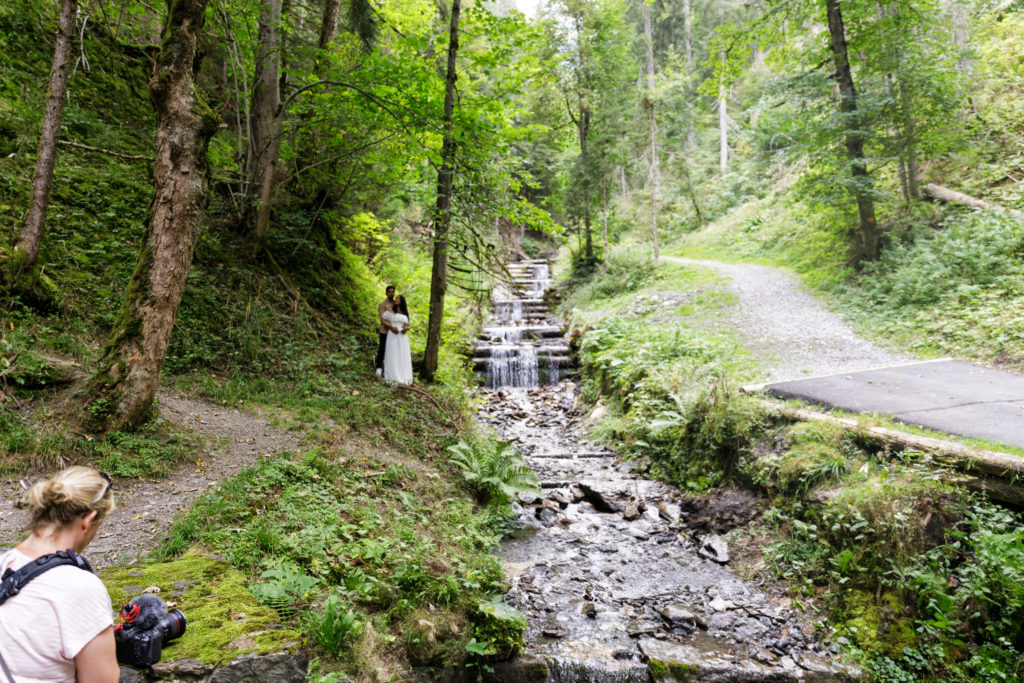
3. The shoot ends the moment you say yes
A proposal is not a thirty minute shoot. Or it shouldn’t be.
The moment itself is over quickly. What follows it matters just as much. Where do you go next? What do you do with the rest of the day? How do you move from the rush of that moment into something that lets you actually feel it?
Most photographers capture the proposal, take a few shots immediately after, and leave. You are then standing in the mountains, newly engaged, with no plan and no one to guide you.
I stay. We move. We visit several locations with different backdrops, different light, different moods. Not because it makes for a better set of images, although it does, but because it turns the proposal into an experience rather than an event. Something you live through rather than something that happens to you. When you watch the film back, you are not watching a photoshoot. You are reliving a day.
4. No access to private land
Some of the most extraordinary locations in the Jungfrau Region are not publicly accessible. They require relationships. With farmers, landowners, local operators. Those relationships take years to build and cannot be replicated by someone making a single trip.
Without them, you are limited to what everyone else has access to. Which is what everyone else photographs.
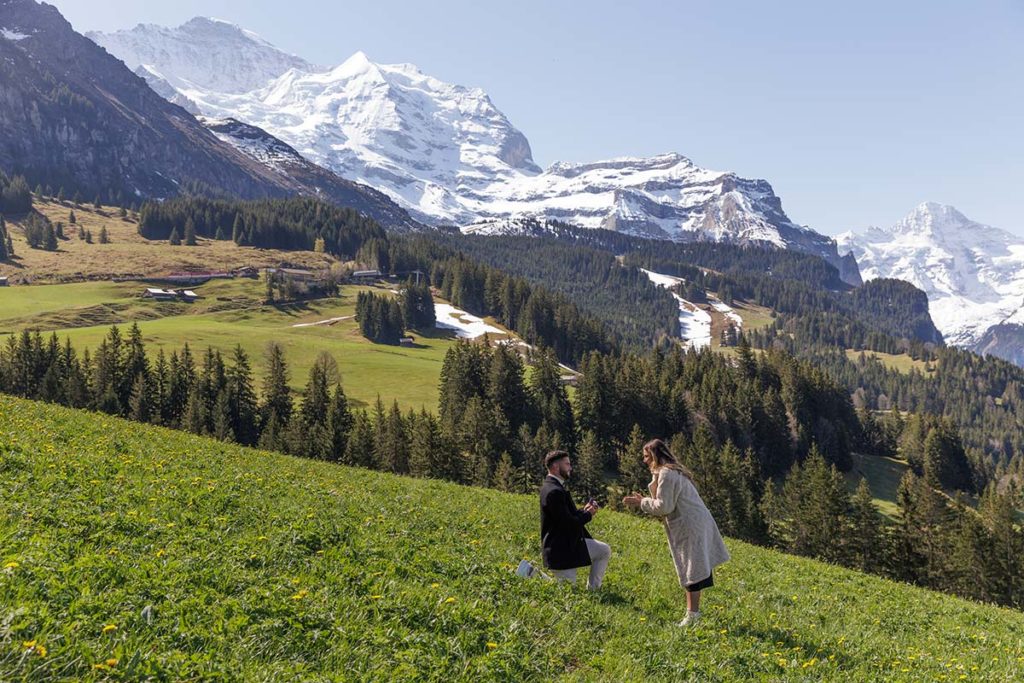
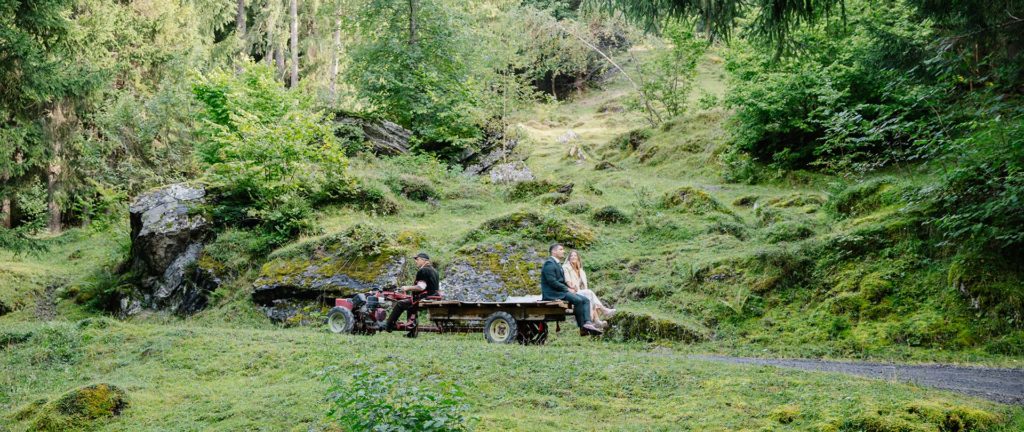
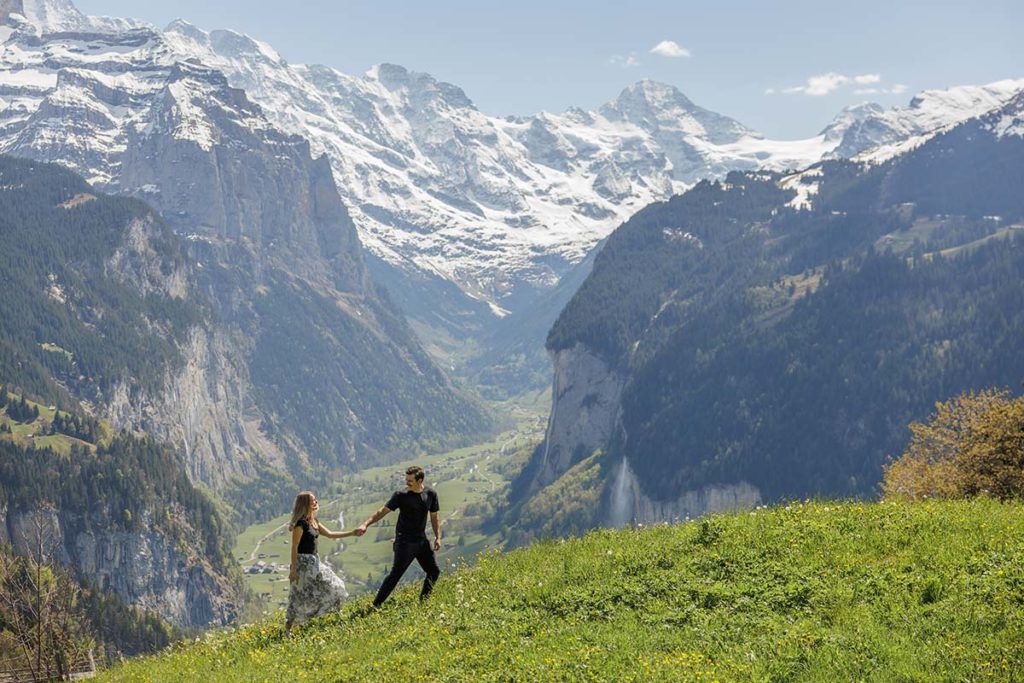
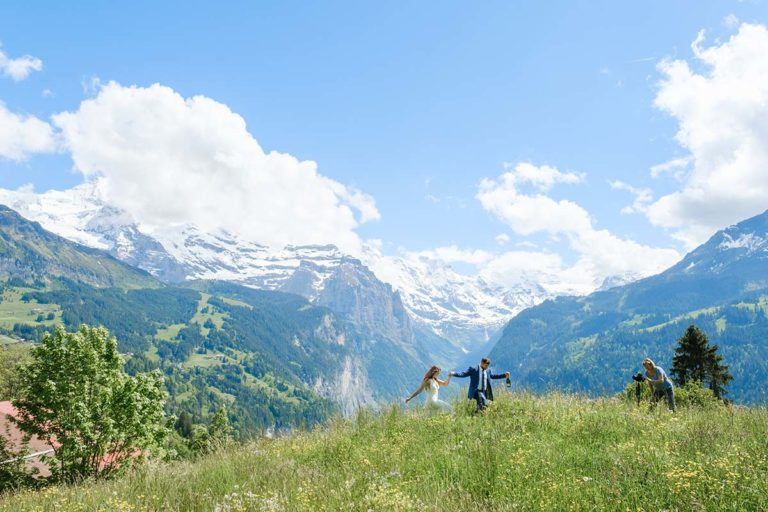
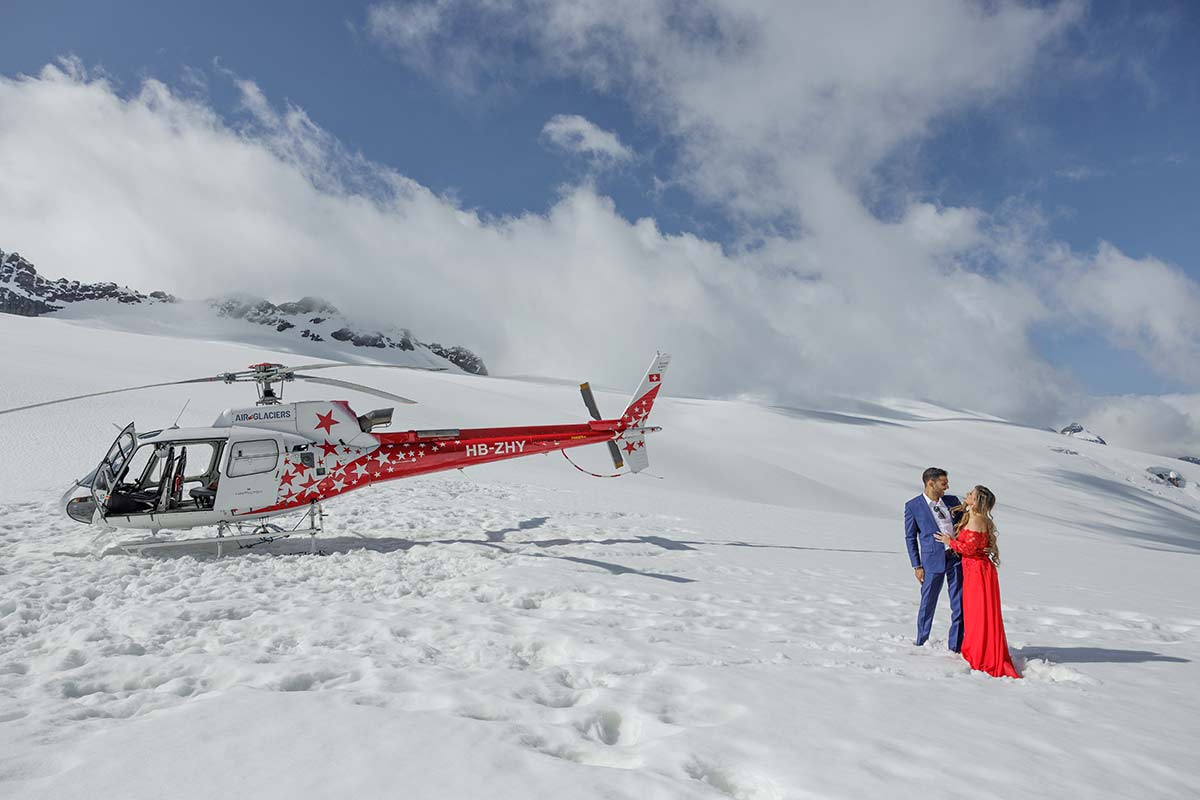
This is proof of the access I can get as your planner, photographer and videographer: Private land with permission and a fun way to get there!
Real Story: The plan that looked right and wasn’t
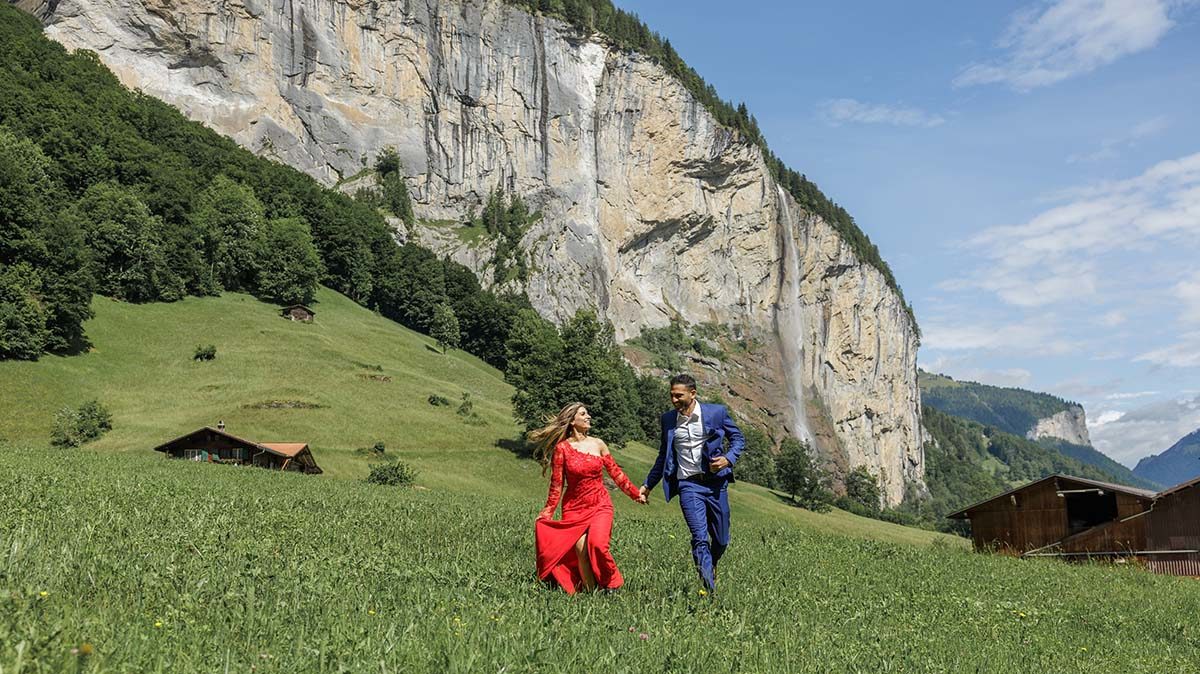
I received an enquiry recently that had been planned from afar, via the internet, in real detail. A specific date. A specific time for golden hour. A specific meadow below Staubbach Falls. A natural, intimate feel. Everything considered, everything locked in.
Almost none of it would have worked.
Lauterbrunnen sits at the bottom of a U-shaped valley. The valley walls are steep and high on both sides. By mid-afternoon in September, the sun has already dropped behind them. There is no golden hour on the valley floor. There is no warm light. There is no version of that shot.
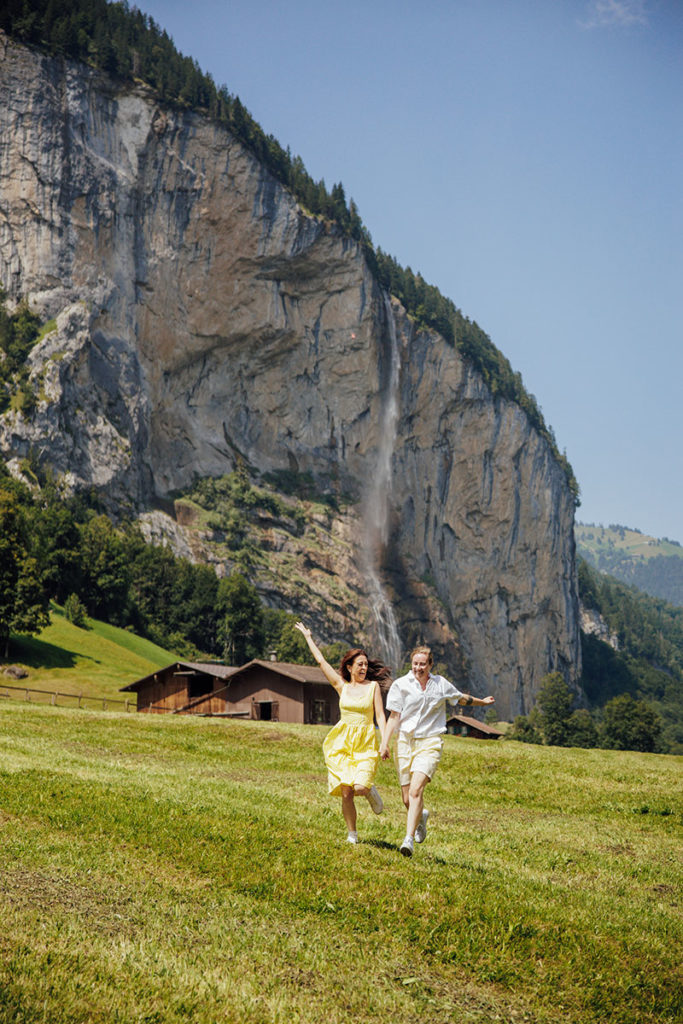
The meadows below Staubbach are either private farmland, which requires local relationships to access, or the standard viewpoint where tourists routinely need to be edited out of photographs. Neither of these things appears in what most people read when they research this location.
We had a call. I walked them through what was possible, what wasn’t, and why. By the end of it, the plan looked completely different. They understood. They trusted the process. They booked. Everything changed. That’s where the real planning begins.
5. The images you saved weren’t real
The photographs you saved were taken in a rare weather window, shot before anyone else arrived, or edited to remove what was actually there. Some were generated by AI. None of them represent a normal day in the Jungfrau Region.
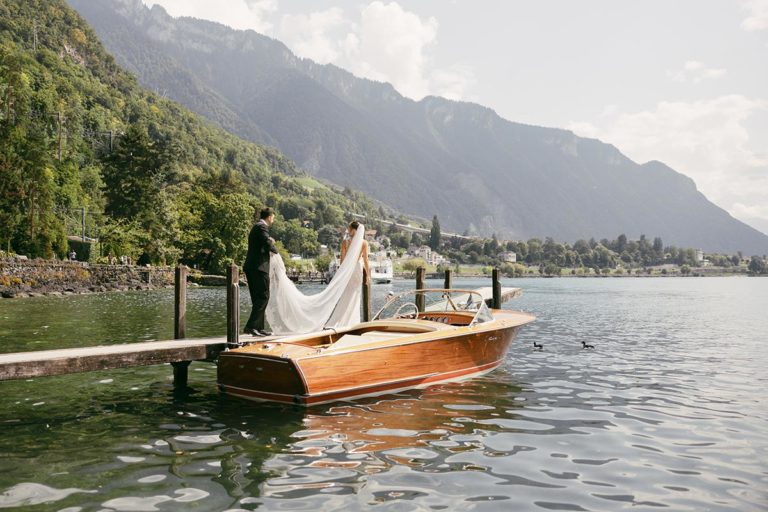
The meadow with no one in it. The pier in perfect morning light. The empty ski slope with the Eiger behind it. All of these exist. None of them are available by default. They require timing, access and local knowledge to find.
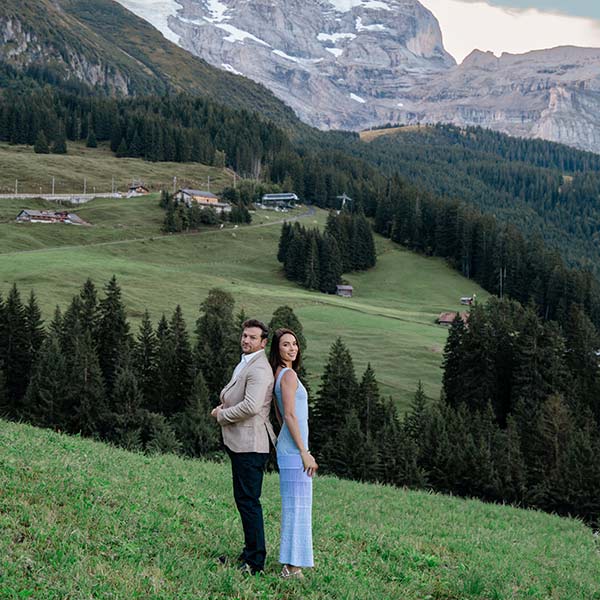
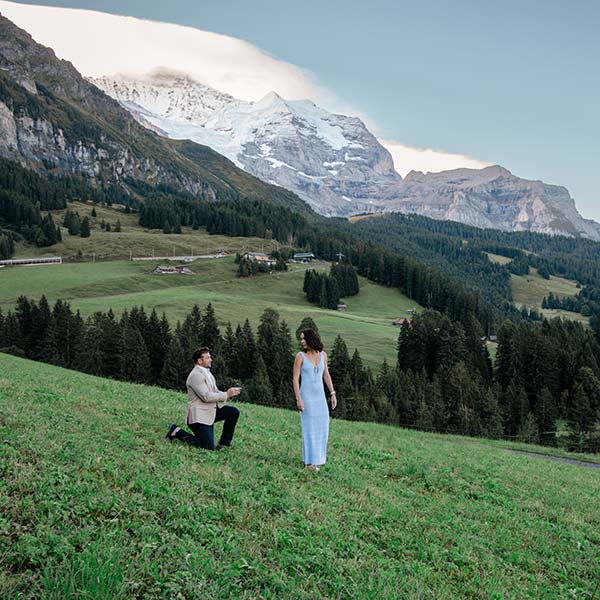
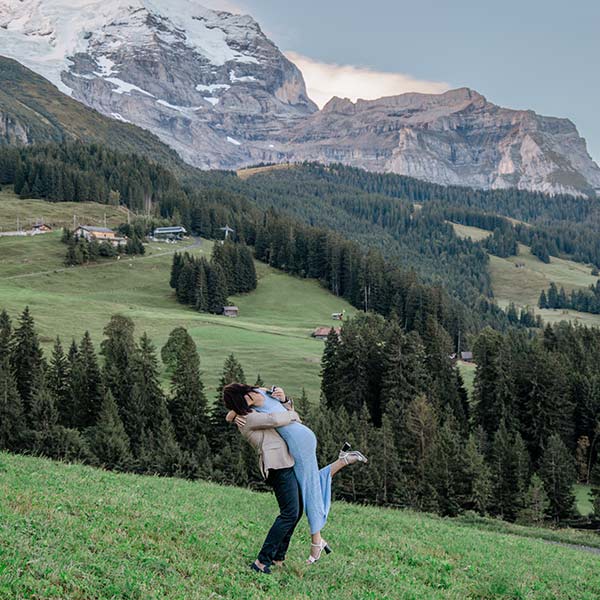
In fact none of the images on my website are altered to remove others from the frame.
6. The proposal date was fixed
A fixed date in the Swiss Alps is a gamble. September can be extraordinary. It can also be completely closed in for days at a time. The same is true of December, March, and June.
A weather window of two or three days changes everything. It means the proposal happens when the conditions are right, not when the calendar says it should. That flexibility is only possible when your photographer lives here and does not need to book flights.
Sometimes the weather still doesn’t land in your favour – but then it’s all about knowing where to take couples to make the most of it and have fun at the same time.
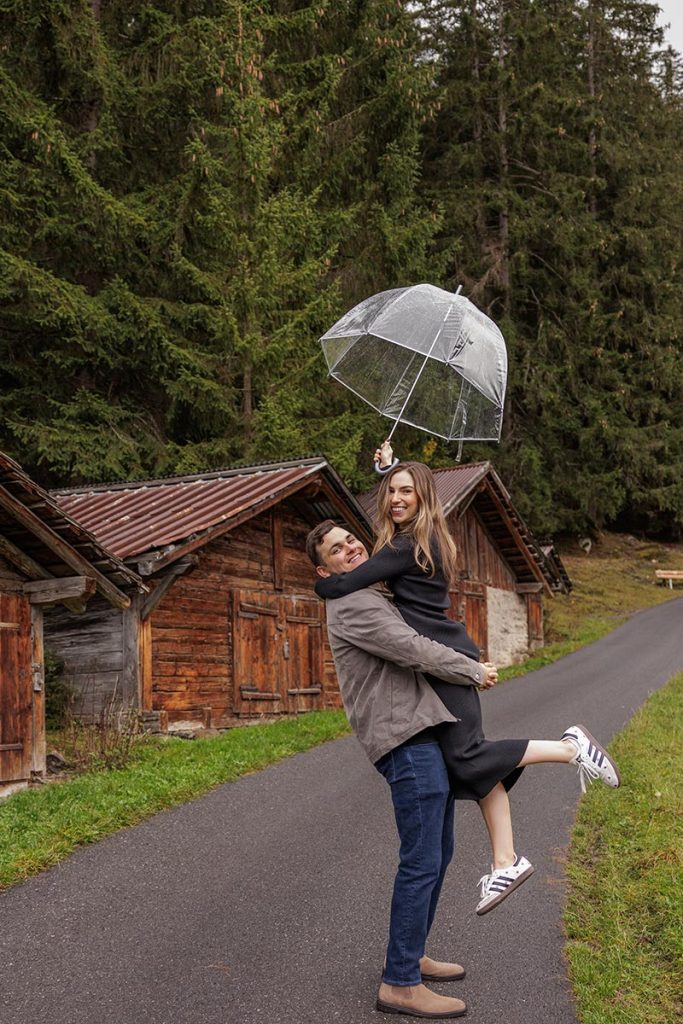
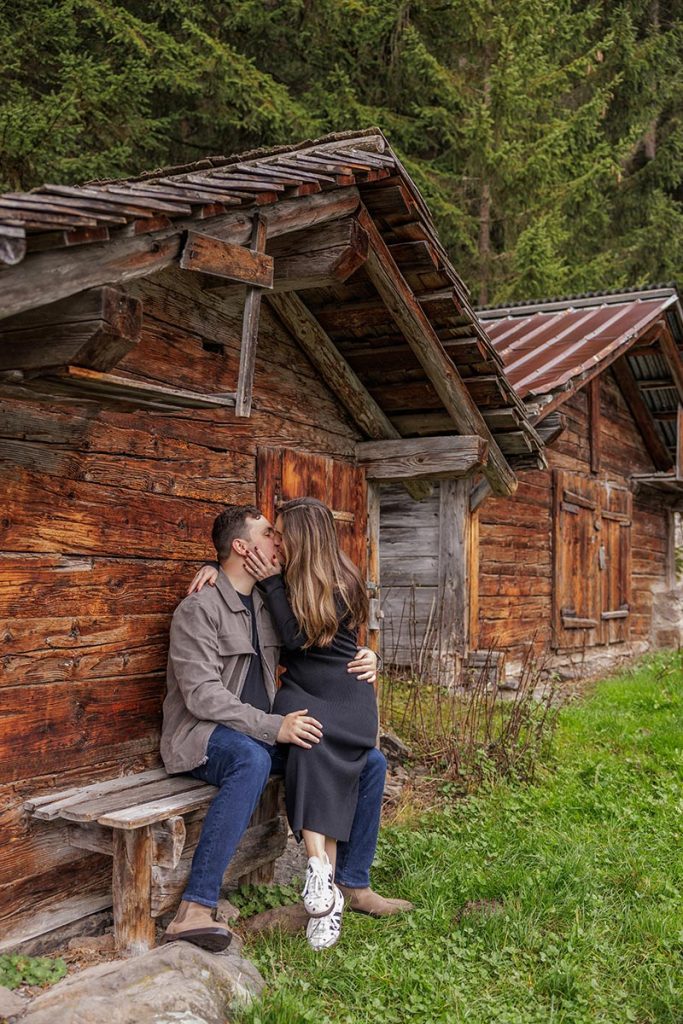
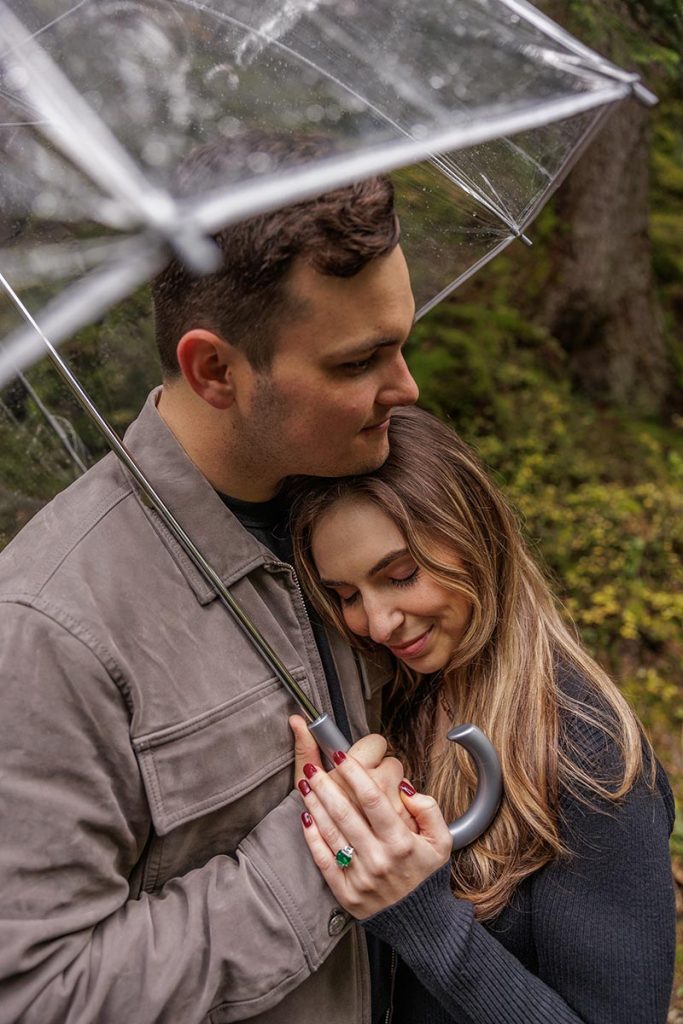
7. The staging got in the way of Switzerland
A proposal is not a shoot. It is a moment. The role of a photographer or filmmaker is to be present without being intrusive, to anticipate without interfering, and to ensure the moment feels entirely yours.
That requires a storyteller’s eye, not a shot list.
It also requires knowing when to step back and let Switzerland do the work. You are standing in one of the most extraordinary landscapes in the world. The mountains, the light, the stillness, the scale of it. That is your backdrop. That is what makes a proposal here different from anywhere else on earth.
And yet some couples arrive having spent weeks focused on flowers, decorations, red carpets and styled setups, and in doing so they crowd out the very thing that made them choose Switzerland in the first place. The nature. The privacy. The feeling of being somewhere vast and quiet with the one person who matters.
No arrangement of candles competes with the Eiger at dawn. No red carpet improves on fresh snow. The beauty is already there. The job is simply not to get in its way.
Real Story: The proposal everyone watched
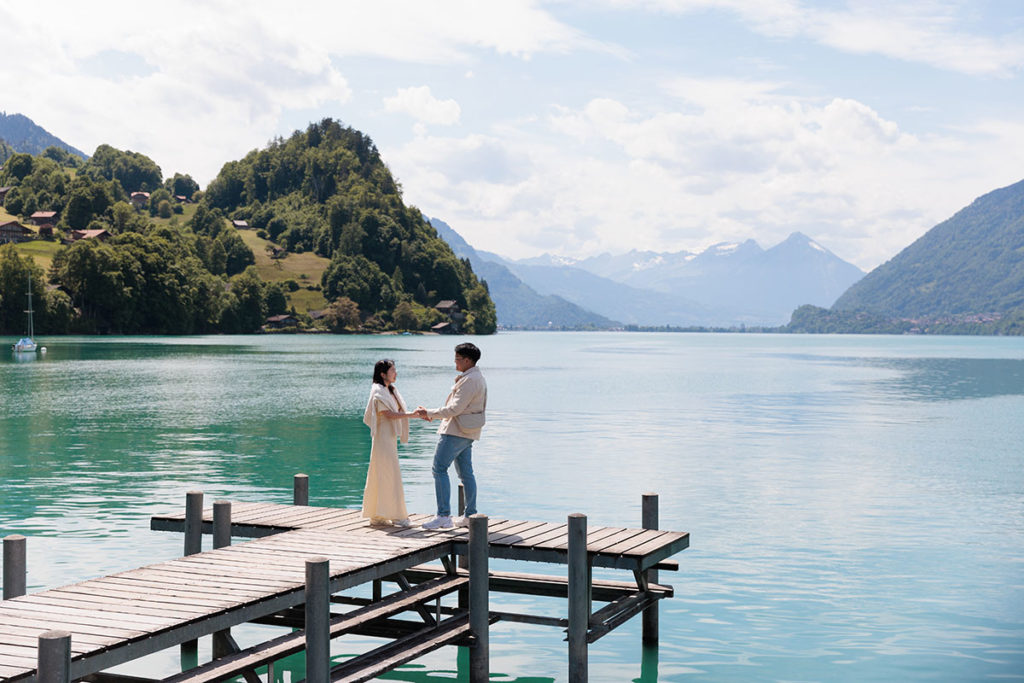
Earlier this year I took a couple to Iseltwald after their proposal. They had just had their real moment in a private location. We went to the pier because they wanted to see it, to enjoy it, to be there together. They had a few minutes on it. People were queuing.
While we were there, another proposal was being set up along the lakeside path leading to the pier. A red carpet. Candles. Flowers. The full production. It had clearly been organised from a distance by someone who had seen Iseltwald on a screen and built something around the image of it.
When the proposal moment happened, my couple happened to be standing on the pier in the background. The moment was not private. It was watched by everyone present. The person proposing had no way of knowing how many people would be there, how public it would feel, or that the quiet, romantic setting they had imagined bore no resemblance to a busy afternoon on one of the most photographed piers in Switzerland.
My couple walked away to somewhere quieter along the lake. They felt the difference. Not because their day had been more elaborate. Because it had been theirs.
8. Nobody was managing the details
Light changes fast in the mountains. What looks perfect at 9am is gone by 10. Getting to a location, managing the moment, and capturing it well requires someone who has thought through every detail in advance so that you do not have to think about any of it.
If you are worrying about logistics during the proposal, something has already gone wrong.
9. There was no film
A photograph captures the moment. A film captures everything around it. The light. The silence. The sound of the mountains. The way the moment actually felt.
Drone coverage, included with every film package, gives the Alps the scale they deserve. A proposal announcement film or save the date can be added to any photography session. These are not extras. They are the difference between a record of what happened and a document of how it felt.
This is a montage of some of my most recent proposal experiences caught on film.
10. The photography, the film and the planning were three separate things
When the person capturing your proposal is also the person who planned it, everything connects. They know the location, the timing, the light, the route, the backup plan. There are no handoffs, no miscommunications, no gaps.
When those elements are split between different people, or left to chance, the day becomes a coordination exercise rather than an experience.
Real Story: The empty mountain
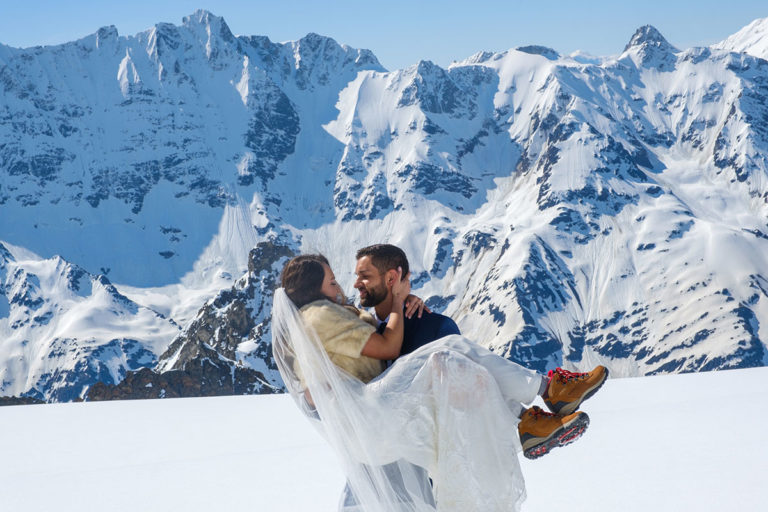
One of the most common winter enquiries I receive goes something like this: the Eiger in the background, snow on the slopes, just the two of us.
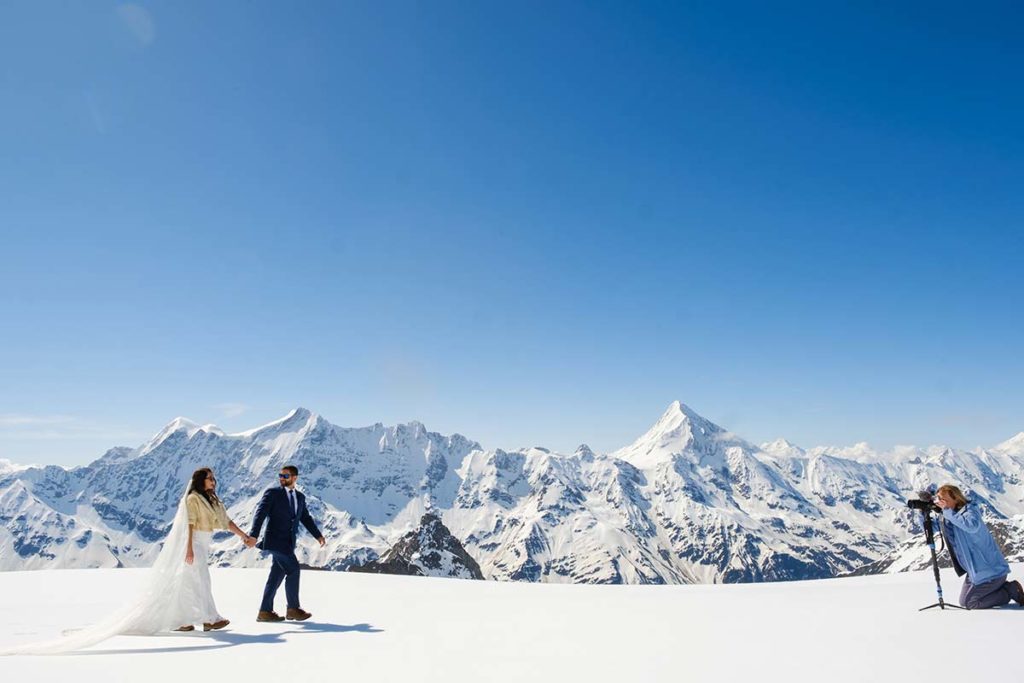
In ski season, the slopes open and within minutes they are full. If you want the Eiger behind you with empty snow and nothing else in the frame, you need to be there before the first lift runs. That means cable car access before the public arrives. It means knowing who to speak to, having those relationships already in place, and understanding the exact window you are working with before the mountain changes entirely.
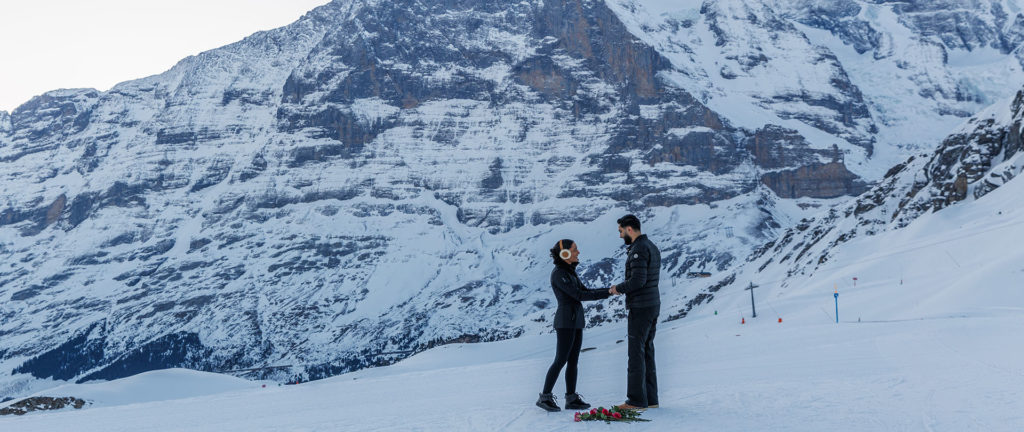
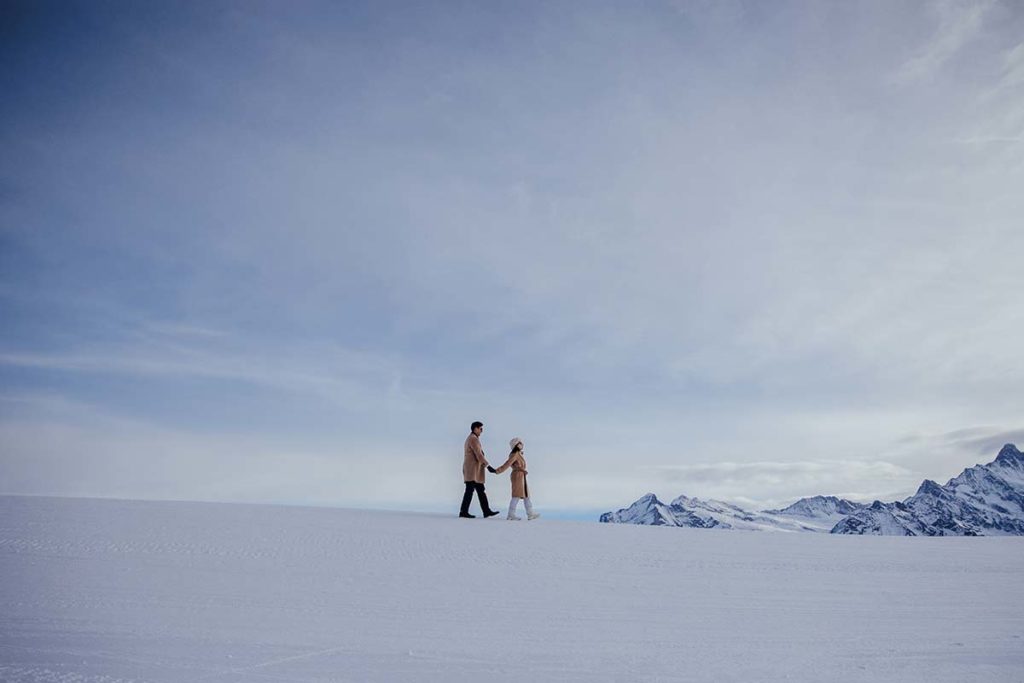
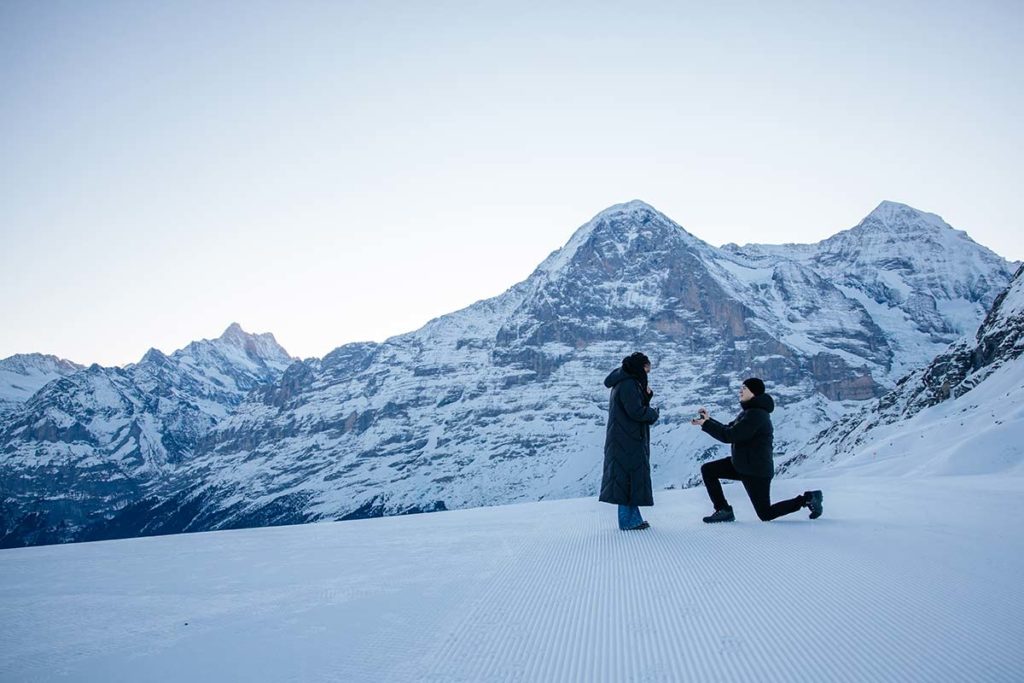
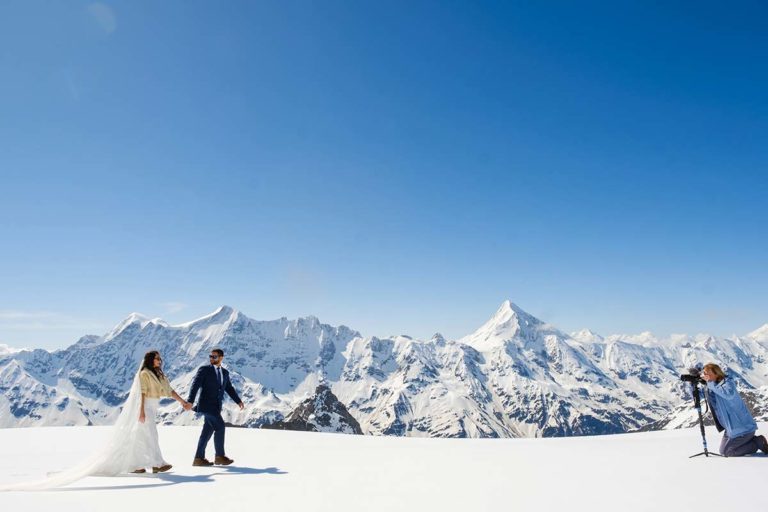
These images were ONLY possible because of the access I have up the mountain ahead of the skiers. The are NOT photo-shopped.
I have that access. I use it. The results are exactly what couples imagined when they first described what they wanted. They just could not have got there on their own.
The same is true of Staubbach. Couples want the falls in the frame. The standard viewpoint is well known, well visited and well photographed. I know the vantage points that give you the falls behind you with nobody else in the picture. They are not secret. They are local knowledge.
11. It Was Planned From the Internet, Not From Switzerland
This is where all of the above begins. A search. A saved image. An AI tool that pulls together plausible-sounding information with no connection to how a place actually works.
The information exists. It is just not accurate. And in the Jungfrau Region, the gap between what you read online and what is actually possible on the ground can be the difference between the proposal of a lifetime and a day that didn’t go to plan.
12. You invested in everything except the memory
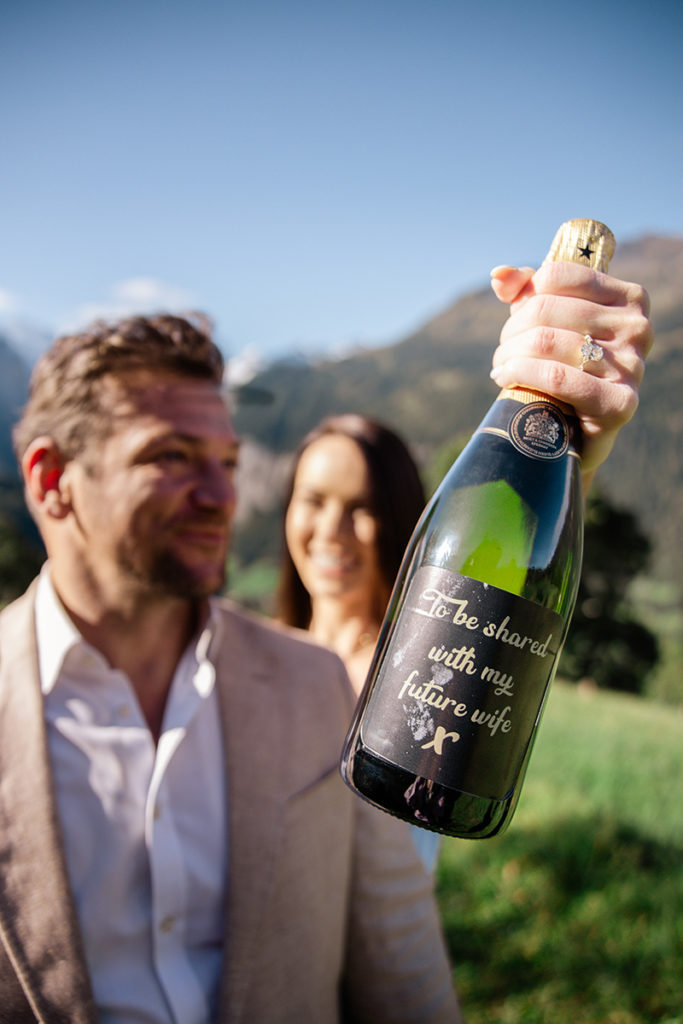
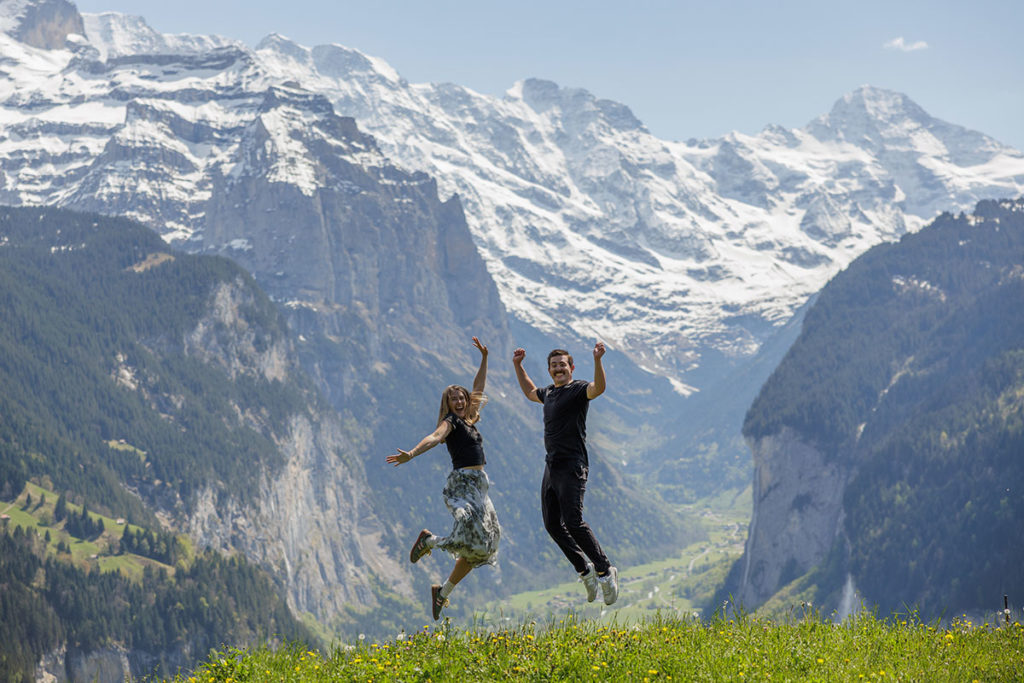
You chose Switzerland. You booked the flights, the hotels, the restaurant for afterwards. You spent months thinking about the ring. The planning that went into getting here was considerable.
And then, for everything that would actually be remembered — the locations, the light, the film, the experience of the day itself, you went for the cheapest option available. Because by that point the budget felt spent.
The ring stays. The trip fades. What you watch back, what you share, what takes you straight back to that moment ten years from now, is the film. The photographs from three different locations in different light. The record of a day that felt like more than a photoshoot.
That is not where you cut corners. Not here. Not for this.
What to do instead …
Decide on the region. Then speak to someone who lives there.
Not to hand over control, but to understand what is actually possible. The best proposals and elopements I have been part of started with a feeling rather than a fixed plan. A sense of wanting mountains, or snow, or something quiet and completely away from the crowds. The specifics came from knowledge, not from a saved post.
If you want to understand why local knowledge makes such a difference, I wrote about it in detail here: Why Choose Local Vendors for your Swiss Proposal or Elopement
If you are planning a proposal or elopement in the Jungfrau Region and you want to do it properly, start with a conversation. Not a quote request. Not a booking form. Just a conversation about what you are imagining and what is actually possible here.
You can find out more about planning your proposal in Switzerland here.
Here’s the official website of the Jungfrau Region to help you plan other activities around your proposal.
That is where everything good begins.
Book a call with Emma – Contact