Wedding Videographer vs Content Creator: What Nobody Is Saying in 2026
Content Is Transient. Footage Is Forever. And I’ve Had Enough
of the Confusion.
Three years ago, I wrote about the arrival of the Wedding Content Creator.
Back then, I understood exactly what a Content Creator was.
I’m not sure I do anymore.
In 2023, the distinction was relatively simple. Content Creators created fast, social-first content designed to be shared. Wedding Videographers made wedding films.
Now? Content Creators are calling themselves cinematic storytellers. They’re filming ceremonies and speeches. Recording *professional audio. Using cameras, camcorders and drones. Offering photography. Creating longer films. Charging thousands.
At the same time, I’m increasingly seeing Wedding Videography described as traditional. Staged. Slow. Something that captures the big moments while Content Creators capture everything that happens in between.
And I think we need to talk about it.
Not because Content Creation doesn’t have value. It does.
Not because the wedding industry shouldn’t change. It should. I know more about that than most, because more than twenty years ago I was part of a very similar disruption at the BBC.
But because somewhere along the way, the distinction between two very different services has become increasingly difficult to define.
And some of the language being used to explain that distinction simply isn’t true.
So what actually separates a Wedding Content Creator from a Wedding Videographer in 2026?
The equipment? Not anymore.
The price? Definitely not.
The deliverables? Increasingly, not even those.
So perhaps there is a more interesting question to ask.
When does a Wedding Content Creator become a Wedding Videographer?
And one more thing before you read on:
I first published this article in May 2026. It’s now August, and I’m already updating it. That tells you something about how quickly Wedding Content Creation is changing. This is an evolving article, and as the industry continues to shift, I’ll keep coming back to it.
Where some of the confusion MAY come from
Here’s where I think some of it may come from:
There is a style of wedding filmmaking that dominates Instagram. Slow motion. Golden hour. Heavily stylised. Every frame beautiful, every moment manufactured. Cinematic in the technical sense but not in the way that prioritises story or truth. “Perfume advert filmmaking”, essentially.
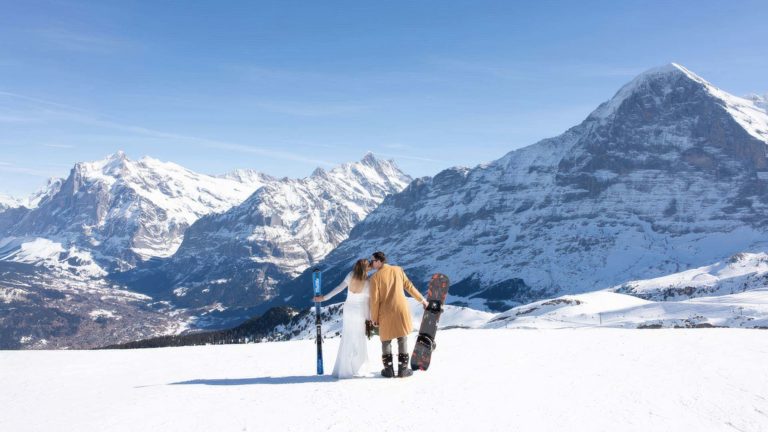
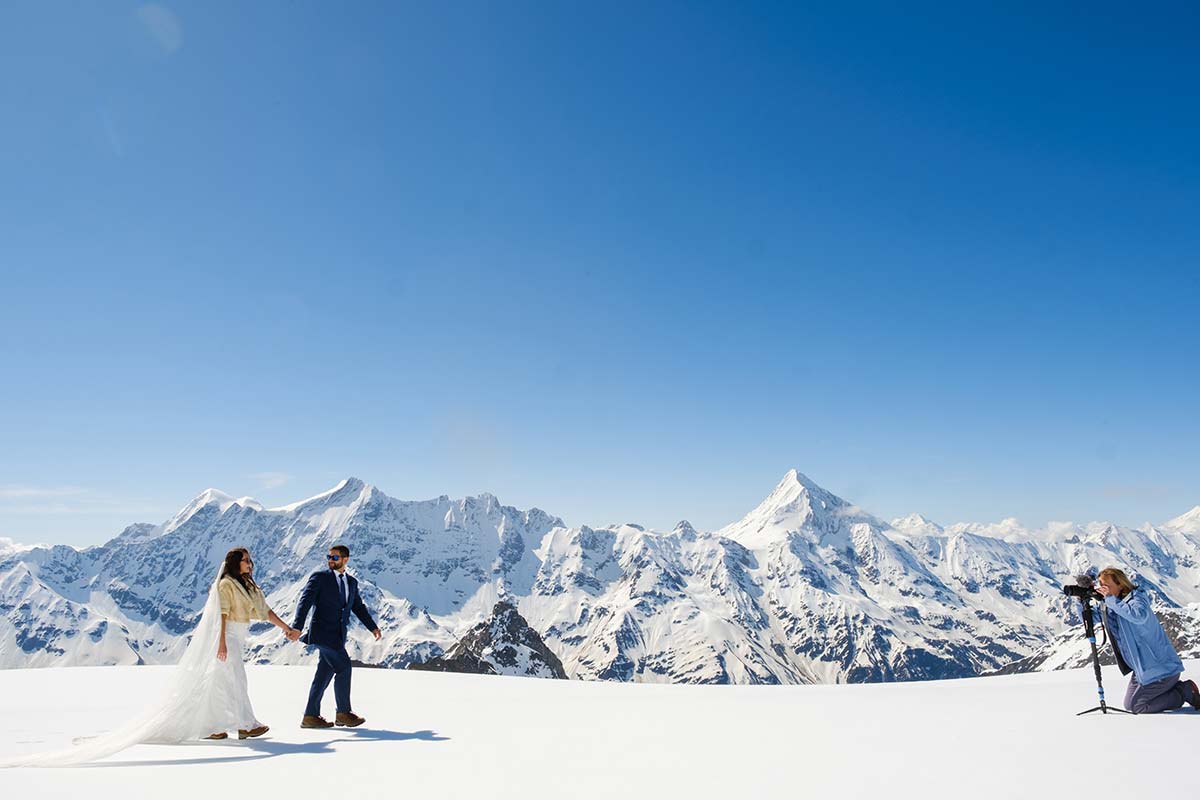
This is a styled shoot. It has been mistaken for a real elopement. That tells you everything about how close this aesthetic has come to what some wedding filmmakers now produce as standard.
And I can understand why, if that is your main reference point for Wedding Videography, you might look at it and think: we offer something different. Real moments. Authenticity. The energy of the day as it actually unfolded.
But that argument was never aimed at all of us.
Some Wedding Filmmakers have always worked this way. Story-first. Unscripted. Focused on what actually happened … not what looked good on a mood board. That is not a new approach that content creation brought to the industry.
It is what we have been doing for years, on professional equipment, with professional audio, and with a deep understanding of how a wedding day moves.
The Content Creators positioning themselves as offering authenticity as a point of difference are not reacting to filmmakers like me. They are reacting to a specific style of filmmaking I have never been part of. Ever.
More on this in a moment…
What has actually changed with content creation
Since 2023, quite a lot actually.
1. The service has changed
When I first wrote about Wedding Content Creators in 2023, the role was predominantly about what happened around the wedding.
Behind-the-scenes moments. Vertical footage. Quick, social-first content designed for immediate sharing.
But increasingly, that isn’t where the role stops.
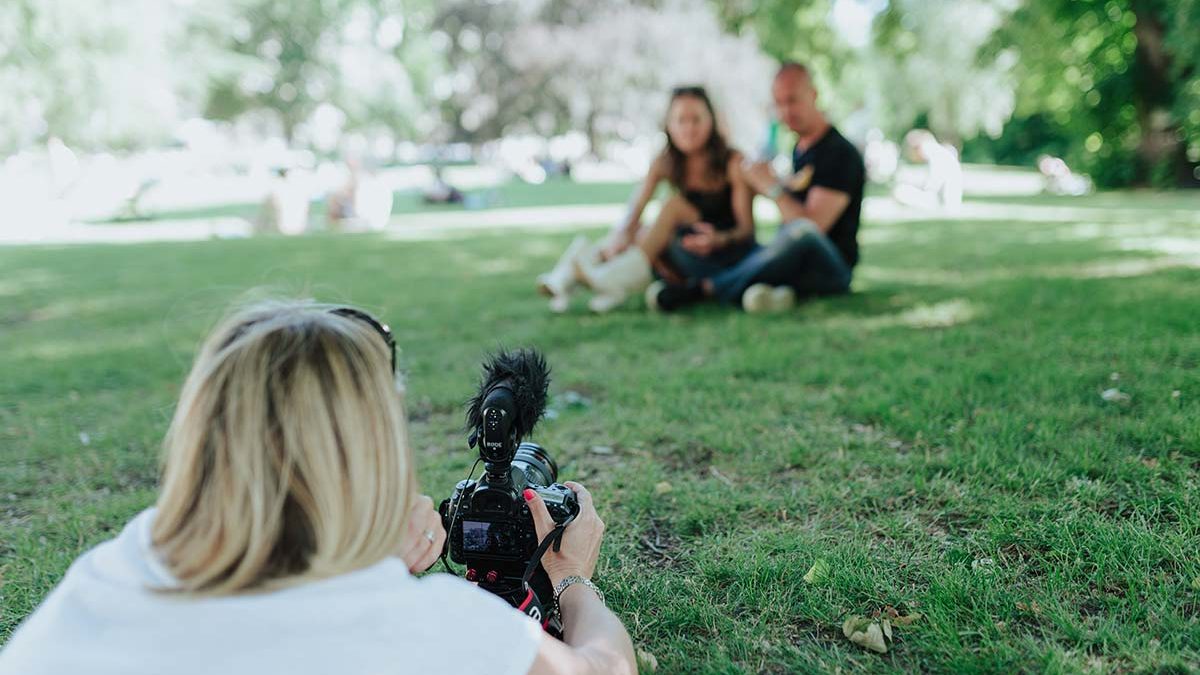
Now some Content Creators are filming the wedding in it’s entirety. Ceremonies. Speeches. Couple portraits. Guests. Reactions. The same candid moments being captured by the Photographer and Videographer, sometimes literally filming alongside them. The photographer and videographer sets it all up. The Content Creator simply films over their shoulders.
Some are using professional cameras alongside phones and camcorders. Some are recording professional audio. Some are producing longer edits. Some are offering photography too.
But recording *professional audio and knowing what to do with it are two very different things. Audio is one of the hardest parts of Wedding Filmmaking to master.
Capturing clean, reliable sound throughout a live wedding day takes knowledge and experience. So does knowing how to edit it, mix it and use it within a film. In fact, audio is one of the areas I spend the most time teaching when I work with Videographers who want to improve their filmmaking.
And plenty of experienced Wedding Videographers still struggle to get it right. So when I see “professional audio” appearing on a Content Creator’s list of services, I don’t automatically take that to mean professional-quality audio.
Owning the equipment to record professional audio and mastering the craft of recording it are not the same thing.
And some are charging very high rates, with very little experience under their belt.
In fact, some Wedding Content Creators now charge more than some Wedding Videographers, so price certainly isn’t the distinction anymore..
And it raises another practical question.
If the Content Creator, Photographer and Videographer are increasingly capturing the same parts of the wedding, how many people do you actually need capturing the same moment?
Some of the Content Creator websites I have looked at are also built on styled shoots, not real weddings. A styled shoot and a real wedding day are not the same thing, and couples deserve to know the difference.
Capturing spontaneous moments at a wedding is a skill built over years. You have to know the flow of the day before it happens. Read the room. Move quickly and disappear just as fast. Be in the right place before the moment arrives.
This takes experience. Fifteen years of it in my case.
This Sneak Peek from a wedding at the Montreux Le Fairmont Palace is full of candid, natural moments and was delivered within 24 hours of the wedding – more on that later in the blog post.
Also what I think is alarming is that some Content Creators don’t have a single example of a long-form edit on their website or social platforms. Yet they’re promoting and selling them as a service.
I understand that with Content Creation, you’re often buying the service as much as the finished product. Someone there to capture the day, deliver a bank of content and create a handful of short edits.
But the moment you start selling anything beyond that, surely you need to show people what they’re actually buying?
If you’re offering edited films as part of your service, where are the examples?
Can you imagine a Wedding Videographer selling films without showing you a single example of what those films actually look like?
I can’t.
2. The marketing is ‘off’
This, for me, is where things become more problematic.
I’m seeing more and more Content Creators talking about capturing the real wedding. The candid moments. The unstaged moments. The reactions. The things you didn’t see. The moments in between.
There’s absolutely nothing wrong with that. Of course Content Creators capture those things.
The problem is when that language is used to suggest that Wedding Videographers don’t…
I came across a post in a wedding industry Facebook group recently from a duo marketing themselves as ‘Luxury Wedding Content Creators’.
Their kit list included an iPhone, vintage camcorder and drone. Their style was described as cinematic, editorial and social-first.
Their pitch?
They capture the real moments. The energy. The in-between. The candid guests, the grandparents, the rehearsal dinner. All the moments outside the main staged events.
So I asked why they weren’t calling themselves Videographers. The reply told me everything:
“Videographers capture staged moments. Content Creators capture the real ones.”
I’ll be honest. I was floored.
Because that IS Wedding Videography.
It has always been Wedding Videography.
Here’s a little Sneak Peek here from a wedding in LA I filmed, stuffed full of candid, un-staged moments. As well as a sprinkling of directed ones…
I’ve seen similar claims elsewhere. That Content Creators capture what happens naturally while Videographers stage or recreate moments. That they allow couples to enjoy their wedding while Videographers take them away from it. That it’s the Content Creator who captures all those little interactions happening around the couple.
And they’re getting it wrong. Yes, some Wedding Videographers stage moments. Some direct extensively. Some create highly produced, editorial Wedding Films.
But many don’t.
Many Wedding Videographers – however they label themselves … Filmmakers, Cinematographers, Videojournalists – have been capturing real, unscripted, in-between moments for decades.
It is fundamental to the way I work. I spent twenty years working as a BBC Video Journalist. Observation, anticipation, listening and recognising a moment as it happens aren’t new concepts I’ve adopted because they’re currently fashionable within the wedding industry.
They’re the foundations of how I’ve worked throughout my career.
And I’m far from alone.
Content Creators can tell couples they capture the moments in between. They can tell them they work unobtrusively. They can tell them they capture things they might otherwise have missed.
But that isn’t what distinguishes Content Creation from Wedding Videography. Because professional Wedding Filmmakers have been doing it all along.
3. Wedding Videography isn’t “traditional”
There is another comparison appearing increasingly often.
Content Creation is modern. Wedding Videography is traditional.
But Wedding Videography isn’t inherently traditional.
It’s a medium, not a style.
Wedding Videography can be documentary. Editorial. Cinematic. Observational. Experimental. Completely un-staged or highly directed. And in most cases there’ll be a bit of everything in any one wedding film… Like this film of Kara and Mike’s Adventure Ski Wedding in Switzerland.
There are Wedding Filmmakers creating highly produced editorial films. There are documentary Filmmakers who barely intervene in the day at all.
There are Filmmakers working with cinema cameras, handheld cameras, vintage cameras, Super 8, drones and phones.
There isn’t one style called “Wedding Videography”.
So calling Content Creation modern doesn’t require calling Wedding Videography traditional.
And using traditional as shorthand for staged, old-fashioned or somehow less authentic fundamentally misunderstands how broad modern Wedding Filmmaking actually is.
4. The language has changed too
Cinematic. Editorial. Documentary. Storytelling.
These words are everywhere in the Content Creation space now.
But what do they actually mean? And can they always be applied to vertical footage captured on an iPhone, sometimes by people with relatively little filmmaking experience?
An iPhone is an incredibly capable camera. I use one myself. But the camera doesn’t make something cinematic. Neither does slow motion, applying a filter or editing clips together in an app.
There are brilliant tools available now. CapCut, InShot and countless others make it possible for almost anyone to create polished-looking content quickly.
But we can all use CapCut. That doesn’t make us Cinematographers.
Cinematic suggests much more than simply looking good. It is about composition. Movement. Light. Sound. Pacing. Editing. Lens choice. Perspective. The decisions made while filming and the skill involved in bringing those elements together afterwards.
Editorial is being used just as freely. But editorial isn’t simply another word for stylish. It suggests a considered visual approach, strong composition, creative direction and an understanding of how individual images work together as a body of work.
And documentary doesn’t simply mean candid or unstaged. Documentary filmmaking is a discipline in its own right. It requires observation, anticipation and the experience to recognise what matters while it is actually happening.
These words have meanings. They describe creative approaches and disciplines, not simply how something looks on Instagram.
But there is one word in particular that deserves even more scrutiny.
Storytelling.
5. STORYTELLING IS AN ARTFORM
There is another word being borrowed by Content Creators, and by plenty of Wedding Videographers too, without much thought: Storytelling.
It appears on websites everywhere now.
Apparently, everyone is a storyteller. They’re not.
I’ve written extensively about what storytelling actually means in Wedding Filmmaking and why Story Of Your Day has always approached it differently.
Because capturing moments is not storytelling. Moments strung together is an edit.
Storytelling is something else entirely. It has structure, intention, layering, sound design. It knows what to leave out as much as what to keep in. It builds towards something. In fact, I wrote about being the original storytellers in this industry long before it became a buzzword.
And here’s my challenge…
Show me a Wedding Content Creator who truly understands storytelling. Show me their work.
I don’t mean a collection of beautiful moments strung together. I mean a story.
I teach ‘The Art of Storytelling through Cinematic Videography’. I’ve spent my career understanding how pictures, words, sound, structure and editing work together to tell one. I know what storytelling is. And I know what it isn’t.
So if you’re a Wedding Content Creator describing yourself as a storyteller, show me the story.
Show me the narrative. Show me the structure. Show me how you’ve used words, pictures, conversations, reactions and sound to create something that actually tells the story of that wedding.
Because if that’s genuinely what you’re creating, it raises another question.
And I’ll come to that in a moment. (and it’s worth reading on…)
As well as cinematic, both documentary and editorial in style, this film was filmed by me but also incorporates footage shot by a guest on a camcorder. I made the decision to include it. I chose where it sits, how it cuts and what it says about the story.
That is the difference between content creation and filmmaking.
Anyone can capture a moment. Not everyone knows what to do with it.
And then there is audio. Professional wedding filmmakers capture vows, speeches, and the unscripted moments between them at broadcast quality. An iPhone does not. That audio is part of the memory. It is often the most important part. It’s certainly half the story.
6. Vertical vs horizontal. It matters more than you think.
And there is something else worth saying plainly. The vertical content I deliver to my clients? I capture it on my iPhone while my main camera is running. I pass it to the vendors and planners who ask for it. My couples are not requesting it. That tells you something about who that format actually serves.
Horizontal footage can be repurposed into vertical in the edit. Vertical cannot become horizontal. So if you are only going to invest in one, make sure it is the one that lasts.
THE WEDDING INDUSTRY IS MAKING THE PROBLEM WORSE
There’s another part of this conversation that shouldn’t be ignored.
It isn’t only Content Creators using this language or implying they are doing a job that videographers are not doing.
I’m increasingly seeing wedding blogs, luxury directories and other industry platforms describe Content Creators as the people who capture the real, candid, unstaged moments and everything happening in between.
Meanwhile, Wedding Videography is described as traditional, polished, staged or focused on the bigger moments of the day.
Where is that information coming from?
Perhaps some of these platforms are simply repeating the language Content Creators are using to market themselves.
But when an established wedding publication or high-end directory repeats those claims, something changes.
Marketing language starts to look like independent advice.
And couples trust it.
They reasonably assume that an article explaining the difference between a Wedding Content Creator and a Wedding Videographer has been researched by someone who understands both professions.
So when those descriptions misrepresent what Wedding Videographers actually do, the publication isn’t simply repeating a trend. It is helping to perpetuate the misconception.
And I think the wedding media needs to take some responsibility for that.
If you are going to advise couples about the difference between professional services, understand those services first.
WHEN DOES A WEDDING CONTENT CREATOR BECOME A WEDDING VIDEOGRAPHER?
And this is where I think we’ve arrived in 2026.
When I first wrote about Wedding Content Creators in 2023, the distinction was relatively clear.
Content Creators predominantly worked on phones. They created vertical, social-first content, delivered quickly and designed to be shared. Wedding Videographers created wedding films.
But what happens when those distinctions disappear?
If you’re filming a wedding, recording its sound, capturing the ceremony and speeches, producing edited films and delivering them professionally to a paying client, at what point does that stop being Wedding Content Creation and become Wedding Videography?
Perhaps the answer used to be vertical, social-first delivery.
Perhaps that’s still the defining difference for many Content Creators.
But when the service expands beyond that, the label becomes much harder to understand.
So, slightly tongue in cheek, perhaps the question is this: are some Wedding Content Creators actually just Videographers in the making?
Do you start as a Content Creator and become a Videographer as your filmmaking skills develop? Is a Content Creator using an iPhone, learning to frame, anticipate moments, edit, record sound and eventually create longer films essentially an entry-level Videographer?
Obviously, that doesn’t describe all the content creators I have researched. There are highly experienced Content Creators producing exactly the service they set out to provide, and charging accordingly.
But seriously, I do think it’s an interesting question.
If the work increasingly looks like Videography, the deliverables increasingly look like Videography and the skills being developed are filmmaking skills, what exactly determines when someone becomes a Videographer?
Is it the camera? The length of the film? The orientation of the frame? The experience?
Or simply what they choose to call themselves?
And Photography is now entering the same conversation. Some Content Creators are offering still photography alongside video content. Which raises exactly the same question for professional Wedding Photographers. At what point does a Content Creator taking and delivering photographs become a Photographer?
I’m not sure the wedding industry has worked out the answer yet.
But I do think we need to start asking the question.
Because if Content Creation continues to expand into the services traditionally provided by Videographers and Photographers, we need to be much clearer about what these titles actually mean.
Not just for those of us working in the industry.
For the couples trying to understand exactly who they’re hiring, what they’re paying for and what they’ll actually receive.
Content creation has a place. This isn’t about that.
None of this is to say that Wedding Content Creation doesn’t have value. It does.
I have a Content Creator on my team when a brief calls for it. There are couples who want fast, social-first content from their wedding, and there are Content Creators doing exactly that, doing it well and providing a service their clients genuinely want.
I am not dismissing the role.
What I’m questioning is how we define Content Creation as those boundaries continue to shift, and the way some Content Creators are choosing to differentiate themselves from professional Wedding Videographers.
There is room for both.
Content Creators don’t need to diminish what Wedding Videographers do in order to demonstrate the value of what they do.
But filming on an iPhone and calling it cinematic is not a new category. Describing what Wedding Videographers have always done and presenting it as a point of difference is not a USP. And using the word “traditional” to describe professional Wedding Filmmakers, as if that’s an insult, is not a reframe. It is a misunderstanding.
A fellow filmmaker, Andrew Gemmell, put it better than I can:
“Content is transient. Footage is forever.”
That is it. That is the whole thing.
Content Creators argue that couples want immediacy. And some do. But a professionally filmed sneak peek delivered within 24 hours, like the one above from Fairmont Le Montreux Palace, is not a compromise. It is the same story, the same moments, the same broadcast quality video and audio, just faster.
Immediacy is not exclusive to an iPhone.
But remember this. Your wedding film is something you will return to for the rest of your life. It is not a reel. It is not a sneak peek for your guests. It is the record of one of the most significant days you will ever have and it deserves to be treated that way.
But perhaps the people who can explain the lasting value of a Wedding Film better than I can are the couples who actually have one.
“The film transported us straight back. It wasn’t just a video of what happened. It was an artful masterpiece of an experience.”
Julia + Matt
STORY OF YOUR DAY: TIME TRAVEL
My whole philosophy is built around time travel. Not staged moments. Not recreated portraits. Real time travel. The kind where you watch the film five, ten, twenty years later and you are back in the room. You can hear the laughter. You feel the nerves before the ceremony. You remember exactly how that moment smelled.
‘PURVEYORS OF TIME TRAVEL THROUGH CINEMATIC STORYTELLING’
That only works if every real moment was caught as it happened. Which means I cannot authentically claim to do that while ignoring the very moments some Content Creators are now saying videographers miss.
We never missed them. They were always the point.
This is not just weddings. Spontaneous moments in live environments and events are what I have always filmed. It is what fifteen years of working across weddings and events looks like.

Still weighing up a wedding videographer vs a content creator?
If you’re trying to understand the practical differences between hiring a Wedding Content Creator and a Wedding Videographer, I covered those in much more detail when I first wrote about Content Creation back in 2023.
That article looks at:
- The difference between social media content and a professionally produced wedding film
- What happens when your wedding is captured predominantly in vertical
- How having another person filming on the day can affect the way your other suppliers work
- Who controls what gets shared, and when
- Why professional audio matters more than most couples realise
- What couples often say they wish they had known
READ: WHAT IS A WEDDING CONTENT CREATOR? (WELL, WHAT IT WAS IN 2023 😉)
from video journalist to wedding filmmaker
PERHAPS I AM PART OF THE PROBLEM …There’s an irony in everything I’ve just written.
When I started working at the BBC, the roles were very clearly defined. Reporters reported. Camera Operators filmed. Editors edited. Producers produced.
Then along came the ‘Video Journalist’.
One person. A smaller camera. Reporting, filming, producing and editing their own stories.
I became one of them.
We were the disruptors. Technology had changed what was possible and the traditional boundaries between jobs started to disappear. Sound familiar?
Today, technology has moved on again. Professional content can be captured on equipment that would once never have been considered suitable for broadcast television.
And perhaps that’s exactly what we’re seeing in the wedding industry.
Because here’s the other irony.
More than twenty years later, I still consider myself a Video Journalist. A Wedding Videojournalist, if you like.
At proposals and elopements, I can be filming, taking photographs and flying a drone, sometimes all within the same commission.
So I’m hardly in a position to argue that everyone needs to stay neatly in their lane.
Maybe Content Creators are disrupting the wedding industry in much the same way Video Journalists disrupted broadcast journalism.
Maybe some of them are becoming Videographers. Maybe some are becoming Photographers. Maybe the boundaries will continue to move.
And that’s fine. What I question is the way some of those differences are being sold.
When couples are told that Content Creators capture the real moments while Videographers stage them, or that Content Creators capture the moments in between while Videographers don’t, they’re being given a very narrow and often inaccurate picture of what Wedding Videography actually is.
Content Creators have their value. Wedding Photographers have theirs. Wedding Videographers have theirs.
And none of them needs to be diminished in order for the others to stand out.
SEE WHAT WEDDING VIDEOJOURNALISM LOOKS LIKE
If you’re planning your wedding and want to understand how I capture it without staging the moments that matter, explore my approach to Wedding Filmmaking and watch the stories I’ve created for couples across Switzerland, Europe and beyond.